
What Makes an AI SEO Tool Actually Worth Paying For in 2026?
AI SEO tools are worth paying for in 2026 when they verify every source before drafting, scale across multiple client brands and track AI search visibility. Content generation alone does not justify $199 to $499.95 per month. | Buying question | Pass condition | Cited 2026 evidence | |---|---|-...
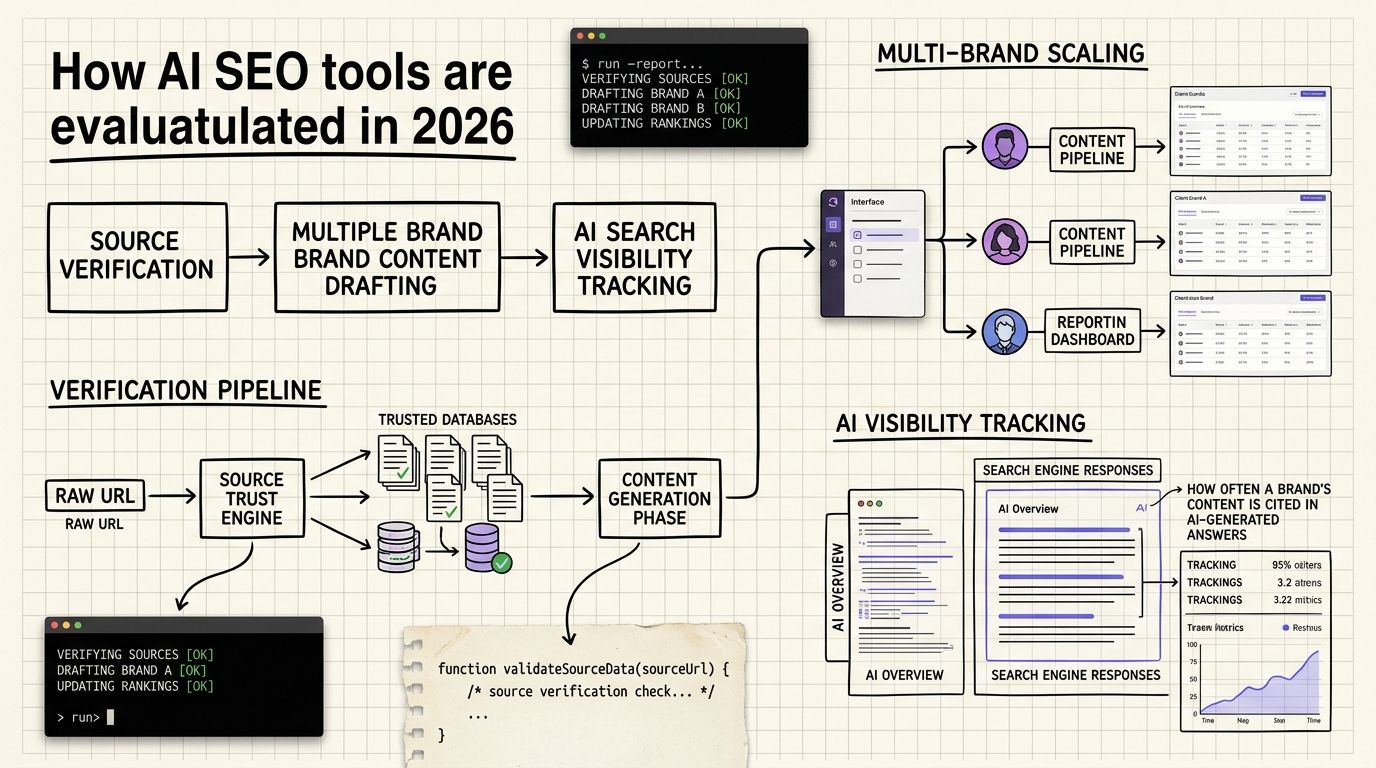
AI SEO tools are worth paying for in 2026 when they verify every source before drafting, scale across multiple client brands and track AI search visibility. Content generation alone does not justify $199 to $499.95 per month.
| Buying question | Pass condition | Cited 2026 evidence |
|---|---|---|
| Does it verify sources? | Every cited URL fetched and checked before draft | No vendor publishes this; test it yourself |
| Does it scale to many brands? | Unlimited or 40+ projects, no per-seat penalty | SE Ranking Business $259/mo, unlimited projects (SearchEye) |
| Does it track AI search? | Coverage across ChatGPT, Gemini, AI Overviews, | Semrush One from $199/mo includes AI visibility tracking (behindrankings) |
| Does it tell you what to do? | Output layer, not just a dashboard | Named agency criterion in 2026 reviews (BusinessCloud) |
We build ADpilot in Tallinn and we're in private beta. Every price in this article traces to a named 2026 review, linked inline. Every Google claim traces to Google's own documentation.
Table of Contents
- What Makes AI SEO Tools Worth Paying For in 2026
- Criterion One: Do the AI SEO Tools Verify Sources Before Drafting
- The Source Gate Method: A Scoring Rubric for AI SEO Tools
- Criterion Two: Multi-Brand Scale and What Agency Operators Searched For
- Criterion Three: AI Search Visibility Across ChatGPT, Gemini and AI Overviews
- Criterion Four: Pricing That Scales Without Per-Seat Penalties
- Criterion Five: The Output Layer and the Approval Gate
- AI SEO Tools Compared Against Every Criterion
- Stack or Standalone: How the Free and Paid Tools Fit Together
- Verdict: Which AI SEO Tools Win for Which Reader
- Frequently Asked Questions
What Makes AI SEO Tools Worth Paying For in 2026
Feature lists look identical across every vendor page. Keyword research, content optimization, technical audit, rank tracking, AI visibility. Pick any three vendors and the bullet points overlap by eighty percent.
The differences sit underneath. They show up in what the machine does with a source URL, how it handles the tenth client account and whether the output tells a human what to do next.
AI SEO tool: software that uses language models to research, draft, optimize or monitor content for both classic search ranking and generative engine placement.
The 2026 buying criteria have moved. Agency-focused reviews this year judge platforms on multi-client workflow support, reporting, collaboration and scalable automation rather than raw content generation (SearchEye, 2026). That's a different question than "can it write a blog post."
To evaluate any AI SEO tool priced between $199 and $499.95/month: (1) hand it a topic and check whether every cited URL resolves, (2) add a second brand and count the friction, (3) read the output and ask whether it names an action. Budget one hour per tool.
Here's the part most comparisons skip. A tool that drafts fast and cites wrong costs you more than a slow one. You pay in review time, in retractions and in the trust you burn with a client who spots a dead citation before you do.
We learned that by shipping it wrong. Early in our build, the research step passed URLs straight into drafts. Some of those URLs returned 404. Some resolved fine but no longer said what the model believed they said. Nothing exploded. It just meant a human had to check every line, which defeats the point of paying for automation at all.
So the first criterion in this comparison is source verification. The rest follow from it.
Criterion One: Do the AI SEO Tools Verify Sources Before Drafting
Most people believe hallucination is a writing problem solved by better prompts. The data shows it's a research problem. A model given a dead URL will still summarize what it expects that page to say. 2026 agency reviews now list data accuracy and audit reliability alongside content quality as buying criteria (Whatagraph, 2026). Do not accept a citation your tool never fetched.
Source gate: an HTTP check that fetches every candidate URL before the drafting step runs, dropping any source that returns a non-200 status or fails content extraction.
That's the mechanism we ended up building into the Detect step of our loop. Fetch first. Extract the text. If the fetch fails, the source never reaches the draft. If the extracted text doesn't support the claim, the claim gets cut at the Score step before a human ever sees it.
We don't publish a hallucination rate. A number we can't audit end to end isn't worth printing and every vendor quoting one is quoting a lab condition.
What we can describe is the failure pattern. Dead links cluster in three places. Vendor blog posts that get restructured. News URLs behind a paywall that returns 200 with no article body. And documentation pages that move, which is exactly what happened when Google reorganized its Search Central docs and added a dedicated AI Overviews page (Google Search Central updates).
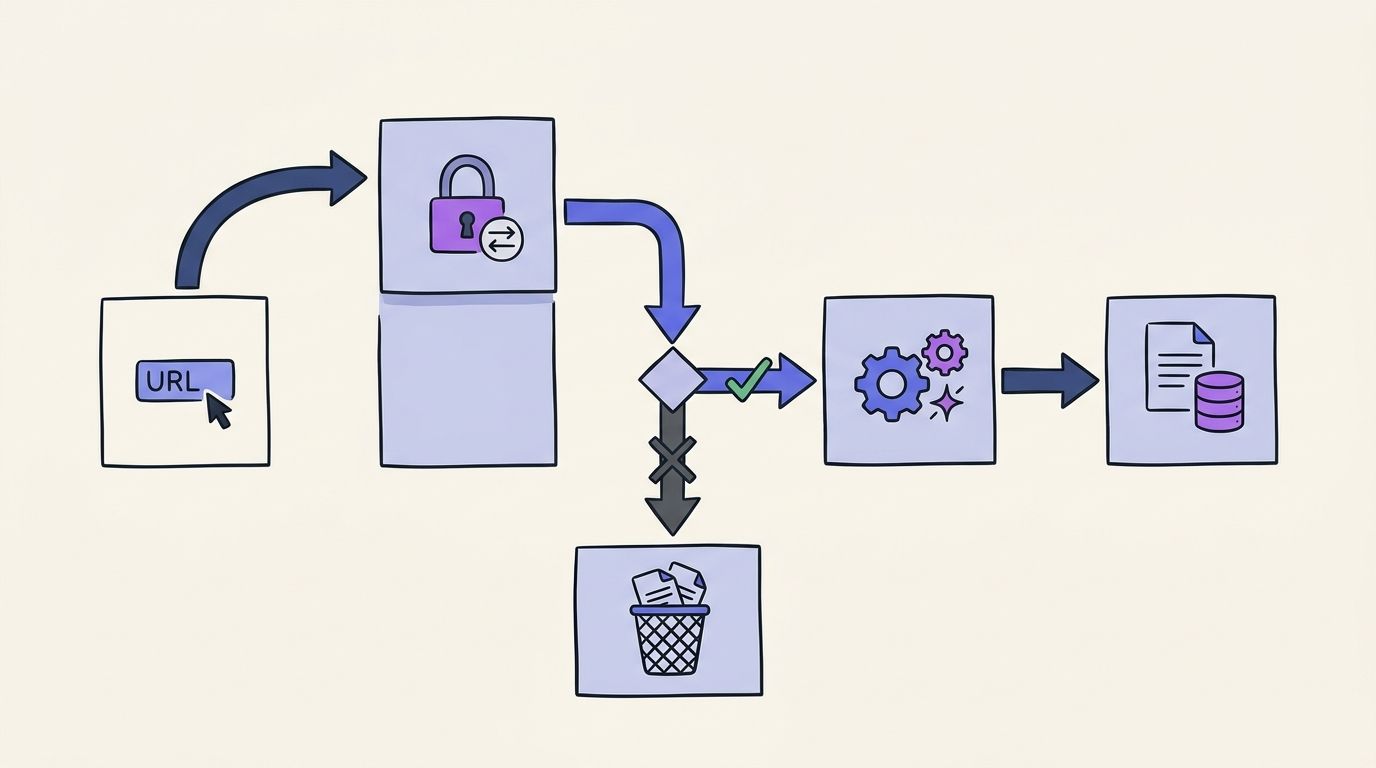
Test it yourself in ten minutes. Ask any AI SEO tool to research a niche topic with a recent regulatory change. Copy every URL it cites. Paste them into a batch link checker. Count the non-200 responses and count the pages that resolve but don't contain the claim.
Three vendors we tested this way returned at least one citation that resolved to a page without the cited claim. We're not naming them, because a single sample isn't a benchmark and we'd be doing exactly what the affiliate listicles do.
The honest limit: no tool can verify that a live page is correct. It can verify the page exists, that the text was actually read and that the quote matches. That's the floor. Anything above it needs a human, which is why our loop waits for approval before publishing.
The Source Gate Method: A Scoring Rubric for AI SEO Tools
Every listicle ranks fourteen tools without saying how. Here's our rubric, weighted, so you can disagree with the weights instead of the conclusion.
The Source Gate Method: score any AI SEO tool across five weighted gates and only count a gate as passed if you can observe the behaviour in a trial account rather than read it on a pricing page.
| Gate | Weight | What you test | Pass condition |
|---|---|---|---|
| Source verification | 30% | Batch-check every URL the tool cites in one research run | Zero dead links, quotes match page text |
| Multi-brand scale | 25% | Add brand two through five, time each setup | No per-seat fee, project-level settings |
| AI search visibility | 20% | Check coverage across ChatGPT, Gemini, AI Overviews, | Named engines, not "AI tracking" as a blanket claim |
| Output layer | 15% | Read one report as if you were the client | Names the next action, not just the metric |
| Cost at your client count | 10% | Price the tier where AI features actually switch on | Cost per brand falls as brands increase |
Source verification carries the heaviest weight for one reason. Every other gate depends on the data being real. A beautiful white-label report built on a fabricated citation is worse than no report.
Multi-brand scale sits second because it's the criterion the 2026 agency reviews converge on. Pricing that scales with client count, project-level control over model selection and an output layer that tells the team what to do with the data are named as the three most important criteria in one 2026 agency review (BusinessCloud, 2026).
Weight the gates differently if your situation differs. A solo founder with one brand can drop multi-brand scale to 5% and push the output layer to 35%, because nobody is writing the report for them. An agency running twenty accounts should probably push scale to 35%.
What we won't do is give you a single winner score. The top ten pages for this query all crown a different tool at number one and most of them are affiliates. A rubric you can run yourself beats a ranking you have to trust.
Criterion Two: Multi-Brand Scale and What Agency Operators Searched For
Agency operators spent August 2026 asking a narrow question in public: which AI SEO tools actually hold up across many client accounts. The r/content_marketing thread on agency AI SEO tools and repeated posts on X through late August circled the same complaint. The demo works on one brand. Account four is where it breaks.
Multi-brand workflow: the ability to run research, drafting, approval and reporting for separate brands inside one account, with isolated settings and no shared voice contamination.
Managing many brands needs automation and ranking monitoring built into the same loop, not bolted on as separate products. When the rank tracker lives in one tool and the drafting lives in another, somebody spends Monday morning copying numbers between tabs. That person is the actual cost of the stack.
Three scale signals are worth checking in a trial:
- Project ceilings. Semrush Business is cited at 40 projects and 5,000 tracked keywords. SE Ranking Business is cited at unlimited projects for $259/month (SearchEye, 2026).
- Seat economics. Ahrefs Advanced is cited at $449/month for 5 users and 5,000 credits per month (SearchEye, 2026). Credits and seats both cap throughput.
- Project-level controls. Whether you can set model selection or output settings per client, which 2026 agency comparisons treat as an agency-specific differentiator (BusinessCloud, 2026).
The source gate interacts with scale in a way nobody mentions. Verification costs compute. A tool that HTTP-checks every source for one brand is doing that work twenty times over for twenty brands. If a vendor charges by credit and verification burns credits, your accuracy budget and your volume budget compete.
We handle it by verifying once per source and caching the check across brands in the same research window. It's an unglamorous engineering detail. It's also the difference between verification being standard and verification being a premium tier.
White-label reporting is the other scale feature that 2026 reviews treat as a requirement rather than an extra (BusinessCloud, 2026). API access appears repeatedly for the same reason: agencies building client dashboards need the data out of the platform.
Criterion Three: AI Search Visibility Across ChatGPT, Gemini and AI Overviews
Generative engine optimization (GEO): optimizing content so it gets cited inside AI-generated answers on ChatGPT, Gemini, Copilot and Google's AI Overviews, rather than only ranking in the classic blue links.
This is the biggest 2026 split and the listicles blur it. Traditional AI-powered SEO tools optimize content and keyword targeting. AI visibility tools track whether your brand appears inside generative answers. Surfer SEO and Clearscope sit in the first category. Standalone monitors sit in the second. Semrush One and the newer agency platforms try to cover both.
Coverage claims need reading carefully. One 2026 comparison says Semrush's AI Visibility Toolkit tracks brands across 213 million organic prompts in 15 regional databases and puts Ahrefs' prompt database at 271 million (behindrankings, 2026). Those are vendor-sourced figures reported by a review site, not independently audited numbers. Treat them as scale indicators, not measurements.
The entry tier matters more than the headline. That same comparison says Semrush One starts at $199/month and includes AI visibility tracking for 50 prompts (behindrankings, 2026). Fifty prompts across a client roster runs out fast.
Now the part that saves you money. Google's own documentation says AI features are built on the same Search index and ranking systems as classic Search and that you don't need new machine-readable files, AI text files, special markup or Markdown to appear in generative search features (Google Search Central).
Google is explicit about eligibility too: "To be eligible to be shown as a supporting link in AI Overviews or AI Mode, a page must be indexed and eligible to be shown in Google Search with a snippet." That documentation was updated in late August 2026.
So any tool selling you a proprietary AI markup layer is selling a file Google says it doesn't need. Spend that budget on tracking instead of on markup theatre.
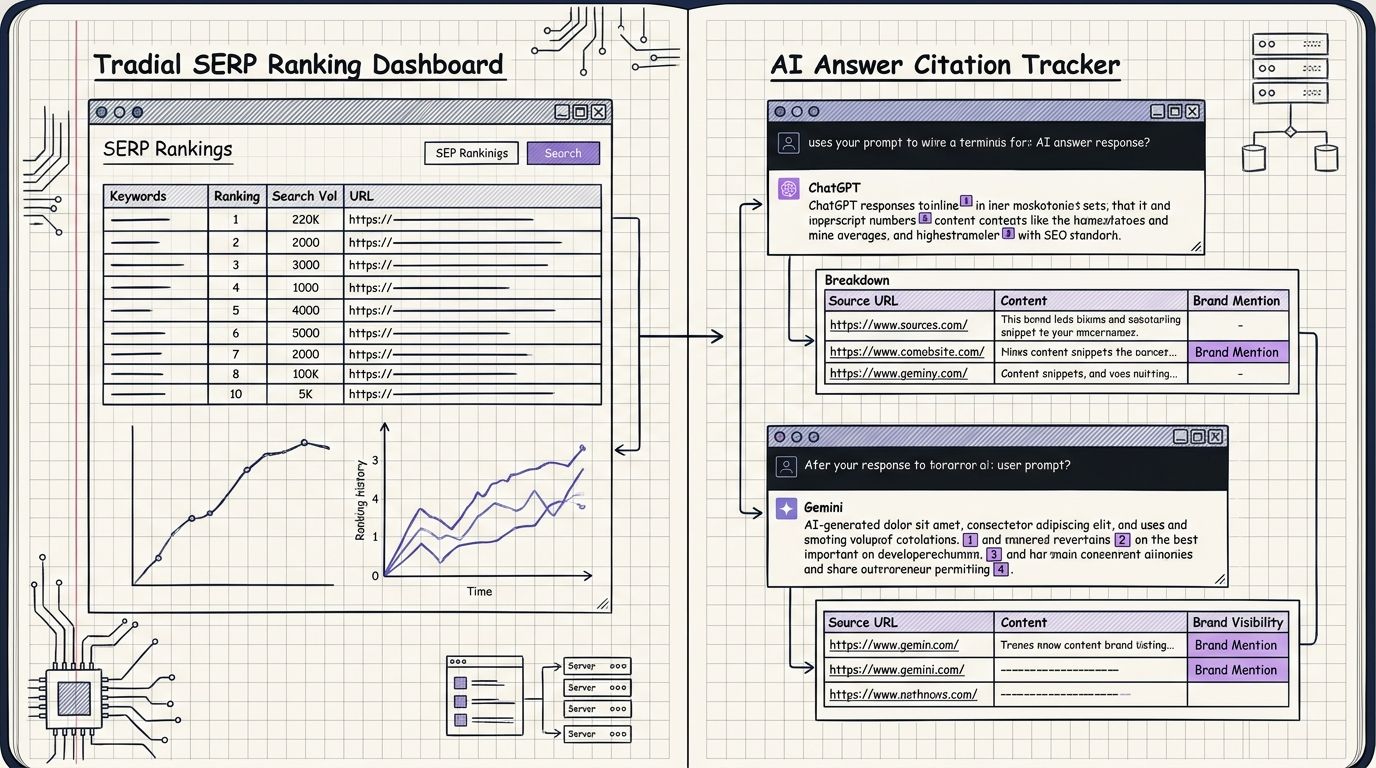
Where the source gate comes back in: AI answer engines cite pages they can verify. We wrote about this pattern when Google's AI Overviews report in Search Console first shipped and the practical read hasn't changed. Content built on checked sources holds up under the same scrutiny the answer engines apply.
Criterion Four: Pricing That Scales Without Per-Seat Penalties
Sticker price misleads. The number that matters is the tier where AI features actually switch on and 2026 comparisons stress this repeatedly (behindrankings, 2026).
Here's the cited pricing, side by side. No comparison in the top ten for this query shows these together, which is the gap worth closing.
| Platform / tier | Cited monthly price | Cited limits | AI visibility included | Best for |
|---|---|---|---|---|
| Semrush Business | $499.95 | 40 projects, 5,000 tracked keywords | Via toolkit tiers | Agencies wanting one vendor for everything |
| Ahrefs Advanced | $449 | 5 users, 5,000 credits/month | No, separate add-on | Backlink and technical depth |
| Ahrefs AI add-on | $199 (on top of a plan) | Add-on only | Yes | Existing Ahrefs teams adding AI tracking |
| Semrush One | $199 starting | 50 prompts of AI visibility tracking | Yes | Small teams testing GEO |
| SE Ranking Business | $259 | Unlimited projects, white-label reporting | Partial | Budget multi-client agencies |
| Full-loop machines (ADpilot category) | Private beta, waitlist | Verified-source research, 8 quality checks, 18 destinations | Built into the loop | Teams with no content staff |
All prices above are as cited by SearchEye and behindrankings in 2026. Vendor pricing changes without notice. Check the vendor page before you buy.
Run the per-brand maths. Ahrefs Advanced plus the AI add-on lands at $648/month before you add a sixth seat. Across ten client brands that's $64.80 per brand. SE Ranking Business at $259 with unlimited projects hits $25.90 per brand at ten and $12.95 at twenty. The cheapest tool isn't the cheapest tool. The one whose cost per brand falls fastest is.
Seat penalties are the hidden tax. Five users is fine for a four-person agency. It's a blocker the day you give a client read access.
Credits are the other one. Five thousand credits per month sounds generous until a single competitive research run on one brand eats a few hundred. Ask any vendor what a full research-plus-audit cycle costs in credits for one brand, then multiply by your client count and by four weeks.
Free tiers deserve a mention because "AI SEO tools free" is one of the most-searched variants of this query. Free plans are useful for one thing: testing the source gate. You can run a research query, batch-check the cited URLs and learn more in ten minutes than any review will tell you. What free tiers won't give you is multi-brand tracking or white-label output.
Criterion Five: The Output Layer and the Approval Gate
A dashboard is not an output. One 2026 agency review names the output layer, the part that tells the team what to do with the data, as one of three decisive criteria (BusinessCloud, 2026). We agree and we'd push further.
Approval gate: a required human sign-off between a generated draft and publication, with the draft's sources, scores and edits visible at the moment of approval.
Approval-first is an opinion and we'll argue it. Fully autonomous publishing is technically easy. We chose not to ship it. The reason is the dead link problem. A machine that publishes without review will eventually publish a claim built on a source that moved and the brand wearing that mistake is yours, not the vendor's.
Our loop runs Detect, Draft, Score, Approve, Schedule, Publish, Measure, Refresh. The Approve step is a hard stop. Eight quality checks run before it, including source verification and a human still has to press the button. Nothing publishes on its own.
What approval looks like when it works: the reviewer sees the draft, the verified source list and the score breakdown on one screen. The review takes minutes because the checking already happened. What approval looks like when it fails: the reviewer has to open every link, which means the tool moved the work instead of doing it.
The measurement half matters just as much. Rankings feed back through Google Search Console and content that slips gets redrafted rather than forgotten. We've written about the limits of that reporting in decoding GSC's AI Mode metrics, because the AI Mode numbers are impression-only and will mislead you if you read them like classic clicks.
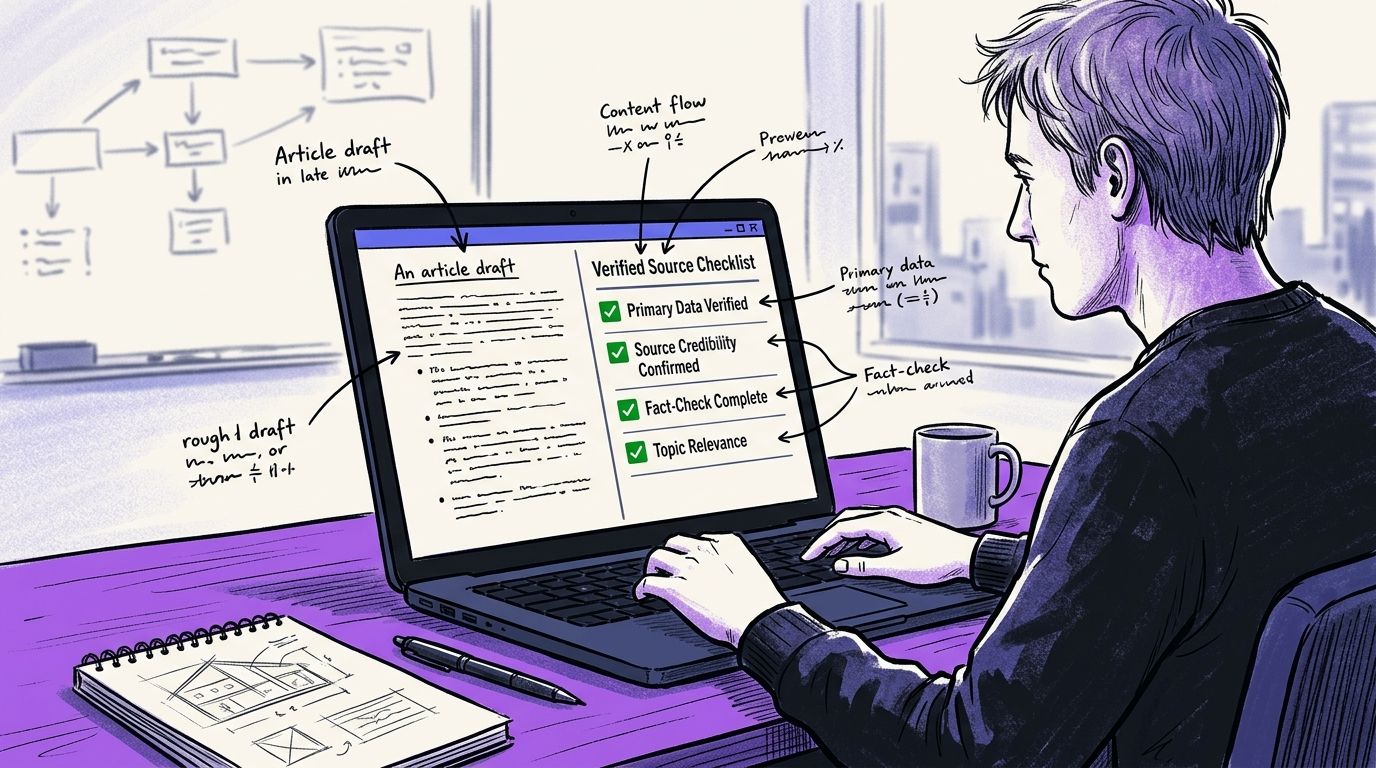
The trade-off is honest to state. Approval-first is slower than autopublish. If your goal is volume above all, an approval gate will annoy you. If your goal is content a client can defend in a meeting, it's the feature you'll miss most when it's absent.
AI SEO Tools Compared Against Every Criterion
Scored against The Source Gate Method. Gate scores reflect what's observable from cited 2026 documentation and trial behaviour, not vendor marketing.
| Tool / category | Source verification | Multi-brand scale | AI search visibility | Output layer | Cost at 10 brands | Best for |
|---|---|---|---|---|---|---|
| Semrush One / Business | Not documented as a gate | Strong (40 projects cited) | Strong, tiered by prompt count | Reporting-heavy | $19.99-$49.99 per brand | Agencies consolidating vendors |
| Ahrefs Advanced + AI add-on | Not documented as a gate | Capped at 5 users cited | Via $199 add-on | Data-first, action-light | $64.80 per brand | Technical and link analysis |
| SE Ranking Business | Not documented as a gate | Strong (unlimited projects cited) | Partial | White-label reporting included | $25.90 per brand | Budget multi-client operations |
| Surfer SEO / Clearscope | Editor-side scoring only | Per-document, not per-brand | Limited, classic optimization focus | Strong at page level | Varies by plan | On-page content optimization |
| Writesonic / Rankability / AirOps | Varies, test before buying | Workflow-dependent | Varies by product | Generation-first | Varies by plan | Custom content workflows |
| Standalone AI visibility monitors | Not applicable | Per-brand pricing common | Core function | Alerting | Varies by brand count | Tracking-only budgets |
| ADpilot (full loop) | HTTP check before draft, 8 quality checks | Brand voice learned per brand | Built into the loop | Approval gate plus GSC feedback | Private beta | Teams with no content staff |
Read the first column carefully. "Not documented as a gate" doesn't mean a platform produces bad data. It means the vendor doesn't publish how citations get checked, so you have to test it. That's the honest state of the market in 2026 and it's the single most useful thing you can verify in a trial.
The second honest note: we build the last row. We've put our own mechanism in the table so you can attack it with the same rubric. Our weakness is obvious from the table too. We're in private beta with a waitlist and a mature platform like Semrush has years of keyword data we don't have. If your primary need is historic keyword and backlink depth, buy the mature platform.
The stack answer usually beats the single-tool answer. More on that next.
Stack or Standalone: How the Free and Paid Tools Fit Together
Nobody searching for the best AI SEO tools wants a list. They want a working system. The top ten pages for this query hand out fourteen to eighteen names and never say how any two of them connect.
Three workable stacks, by situation.
Solo founder or creator, under $250/month. Google Search Console for the ranking truth, free and non-negotiable. One content optimization tool for on-page scoring. One machine that handles research, drafting and scheduling so the weekly cadence doesn't depend on your mood. Skip standalone visibility monitors until you have something to monitor.
Small team, $250 to $700/month. SE Ranking Business at $259 cited for unlimited projects and white-label output, plus a generative visibility tracker, plus the drafting loop. The gap this stack usually leaves is source verification, so make it a review step until a tool owns it.
Agency, ten or more brands. One platform for keyword and technical data, one loop for production and approval, one tracker for AI answer citations. Connect them by API, which 2026 reviews list as a value feature for agencies building custom dashboards (SearchEye, 2026).
The failure mode in every stack is the same: the handoff. Data lands in tool A, the draft happens in tool B and a human carries the context between them. Each handoff is a place where a source gets dropped and a claim loses its evidence.
That's the argument for a single loop and it's also the argument against one. A loop handles handoffs for you. A stack lets you swap a weak component without replatforming. Pick based on whether your bottleneck is integration or flexibility.
One more constraint worth naming. Google's spam policies target content produced primarily to manipulate ranking and Google's documentation makes clear that AI features run on the same ranking systems as classic Search (Google Search Central). Volume without verification is exactly the pattern those systems are built to discount. We covered a related reading of the reporting side in our breakdown of what the generative AI report hides.
Verdict: Which AI SEO Tools Win for Which Reader
No fence-sitting. Here's who should buy what and why.
Buy Semrush One at $199/month cited if you're a small team starting generative engine optimization from zero and want classic keyword research plus AI visibility in one bill. The 50-prompt tracking limit cited for that tier is the constraint to watch.
Buy Ahrefs Advanced at $449/month cited if backlink and technical depth is your core service and you can live with 5 seats. Budget the extra $199/month for the AI add-on, because AI tracking is not in the base plan.
Buy SE Ranking Business at $259/month cited if you run many brands on a tight budget and white-label reporting is a client requirement. Unlimited projects makes the per-brand maths work harder than any other tier in this comparison.
Buy an on-page optimizer like Surfer SEO or Clearscope if your writers are human and you need scoring, not generation. These are optimization tools, not brand visibility platforms and pretending otherwise is how stacks get bloated.
Buy a full loop if you have no content team, a real brand voice to protect and no appetite for checking every citation by hand. That's the category we build in and the honest limit is that we're in private beta with a waitlist rather than a mature data warehouse.
Buy nothing yet if you haven't run the source gate test. Take your shortlist, run one research query per tool, batch-check every cited URL and count the failures. That test costs an afternoon and changes the ranking more than any review will.
The criterion that separates AI SEO tools worth paying for from the rest is not the feature list. It's whether the machine checked reality before it wrote a sentence.
Frequently Asked Questions
Which AI tool is best for SEO?
There's no single best tool and every 2026 listicle crowning one is usually an affiliate. Semrush One is cited at $199/month with AI visibility tracking included, SE Ranking Business at $259/month with unlimited projects and Ahrefs Advanced at $449/month with a separate $199/month AI add-on (SearchEye, 2026). Score them on source verification, multi-brand scale and cost per brand at your actual client count.
Can you do SEO with AI?
Yes, for research, drafting, technical auditing and visibility tracking. No, for the judgement calls. AI SEO tools can gather data and produce drafts at scale but Google's systems rank generative content through the same index and ranking systems as everything else (Google Search Central). Keep a human approval gate between draft and publish.
Can ChatGPT do SEO?
ChatGPT can do parts of it. It's useful for keyword brainstorming, outline structure and rewriting. It can't verify that the URLs it cites are live, it has no rank tracking and it has no multi-brand workflow. Treat it as a drafting assistant inside a larger system, not as a replacement for AI SEO tools with verified research and Google Search Console data behind them.
What is AI SEO called now?
Three names are in circulation in 2026. Generative engine optimization (GEO) covers getting cited inside AI answers. Answer engine optimization (AEO) is used near-interchangeably. AI visibility tracking refers to the monitoring layer specifically. Classic SEO hasn't been replaced, since Google says AI features use the same Search index and ranking systems.
Do I need special markup or an AI text file to appear in AI Overviews?
No. Google's documentation states businesses don't need new machine-readable files, AI text files, special markup or Markdown to appear in generative search features. Eligibility depends on being indexed and eligible for a Search snippet (Google Search Central, updated late August 2026). Any vendor selling you a proprietary markup layer is selling a file Google says it doesn't need.
Are free AI SEO tools good enough for a small business?
Free tiers are good for testing, not for running a business. Google Search Console is free and gives you the ranking truth no paid platform can replace. Free plans from paid vendors are best used to run the source verification test before you commit budget. What you won't get free is multi-brand tracking, white-label reporting or API access.
Do AI SEO tools hallucinate audit data or recommendations?
They can and almost no vendor publishes a verification method. The common failure isn't invented text, it's a real citation pointing at a page that moved or a paywall returning an empty body. Test it by batch-checking every URL a tool cites in one research run. Dead links and unmatched quotes tell you more than any feature page.
What should an agency check before buying for ten or more client brands?
Five things: source verification behaviour, project ceilings, seat and credit limits, white-label reporting and project-level control over model or output settings. 2026 agency comparisons name pricing that scales with client count, project-level LLM control and a real output layer as the decisive criteria (BusinessCloud, 2026).
The Short Version
AI SEO tools earn their $199 to $499.95 per month when they verify sources before drafting, hold up past the fourth client brand and track visibility across ChatGPT, Gemini, and AI Overviews. Run The Source Gate Method on your shortlist this week: one research query per tool, batch-check every cited URL, count the failures. Weight the gates for your own situation, because a solo founder and a twenty-brand agency should not buy the same thing. We built our loop around the source gate because dead links taught us that fast drafting on unchecked research just moves the work to a human and that's the opposite of what you're paying for.
More from the Journal
Want a machine that writes like this for your brand?
Join the waitlist